
The best solution goes nowhere if people cannot find it, understand it, or trust it. Your listing does the selling when you are not in the room, so it is worth getting right. Here is how to write one that stands out and earns adoptions.
The listing
The listing is what consumers see first. Your solution's name and the first line of your description are competing in a full grid of other listings, so lead with the outcome, not the mechanics. Write the first like of your description for the person scanning, so they immediately understand what your solution can do. Also, choosing an icon that speaks to your audience and your solution's capabilities helps the right people stop and look.

Turn interest into confidence
When someone clicks in, your detail page has to turn interest into confidence. The strongest listings tell: what you get, how it works, and when it is the right fit. The more clearly someone can picture using your tool, the more likely they are to adopt it.
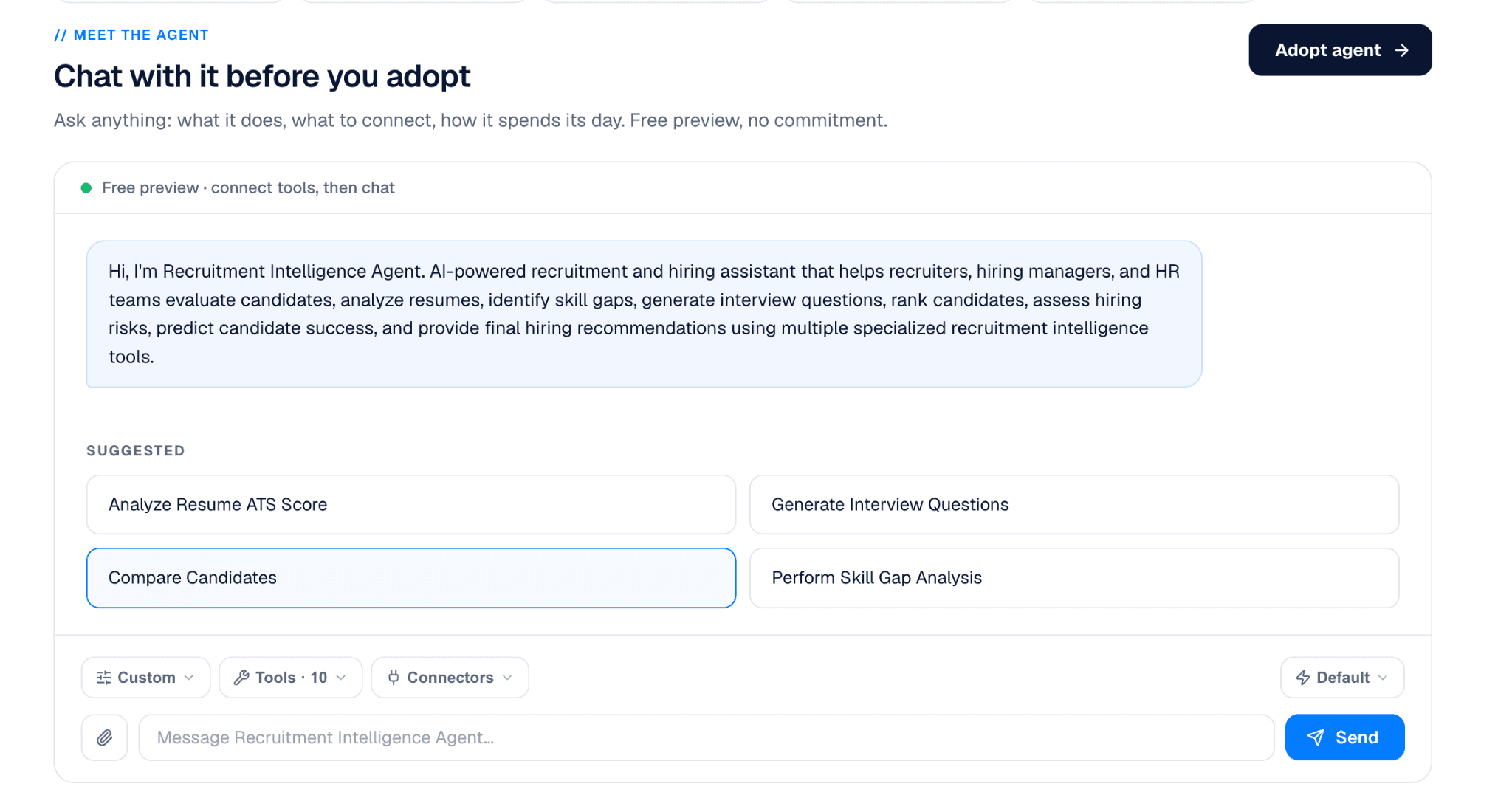
Give them the best way to try it without commitment, as well. When you publish an agent, you can set its prompts, and a few well-chosen ones let a newcomer see it work for themselves. They can then choose from these prompts in your sandbox as they test your solution.
Name your limitations
When describing what your tool does, it is tempting to list only the strengths and leave out the limitations. Naming your boundaries does the opposite of what you might expect. It signals transparency, and that credibility is what makes the rest of your claims believable. A user then has reason to trust your solution's claims before running it.
Earn trust over time
Some trust can only be earned. There is no shortcut to your first real adoptions and reviews. Build something that works, get it in front of real users, and let the ratings and adoptions build from there.
Keep it alive
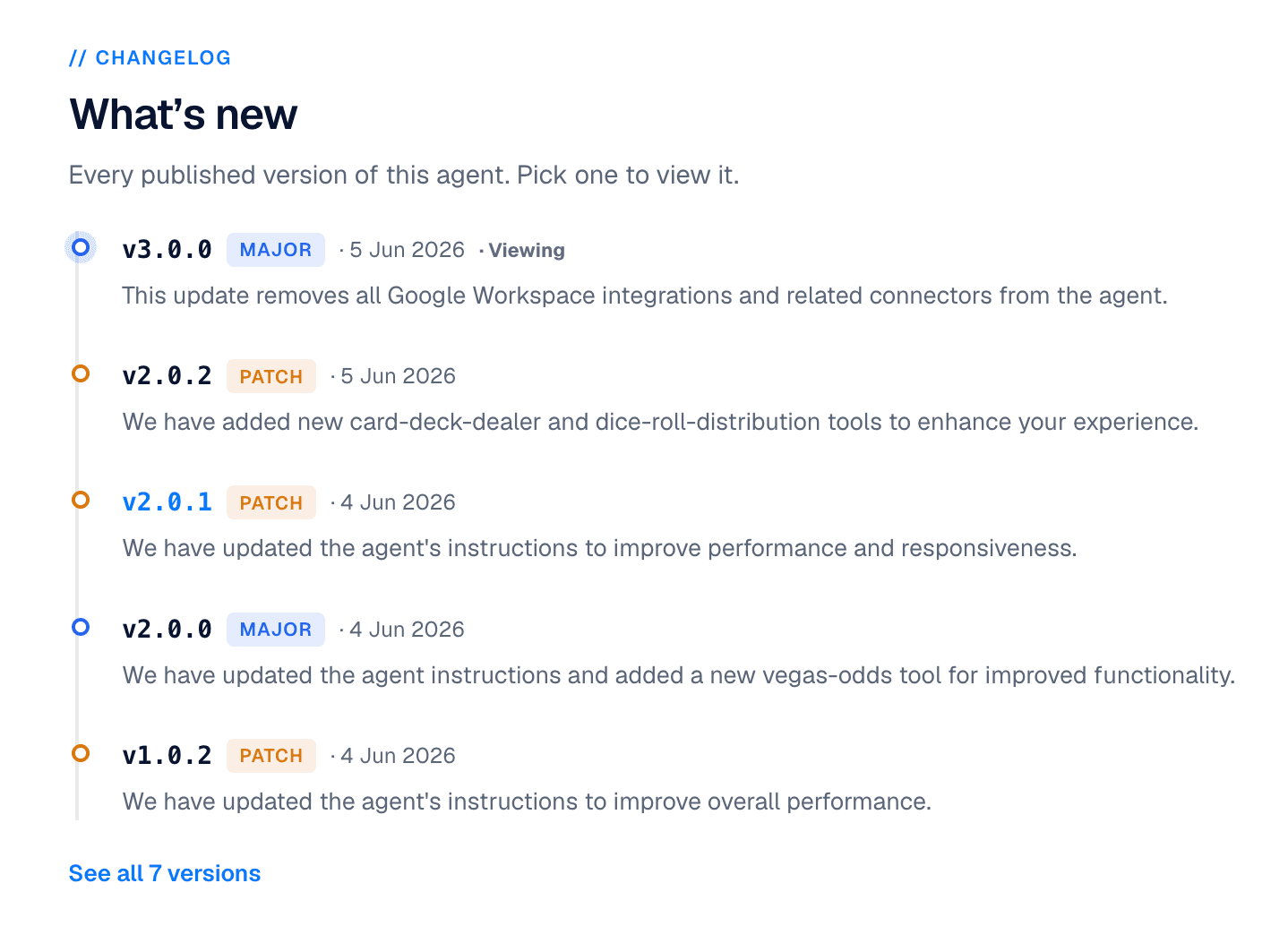
You can set your listing and leave it to earn, but keeping an eye on it is what sustains consistent adoption. Your reviews and your agent's uptime show how it is performing for the people relying on it. From there, you can publish new versions to fix bugs users are running into or add features they are asking for, which keeps adoption growing. A clear change log and steady versions also show a user that your tool is maintained, not abandoned.
TL;DR
Your listing does the selling when you are not in the room. Lead with the outcome on your preview, turn interest into confidence on your detail page, and let people try before they commit. Be transparent about your limitations, to show users what to expect. Then earn real reviews and keep an eye on how your solution performs, so you can improve it and keep adoption growing.