As AI marketplaces continue to grow, one challenge quickly becomes apparent: choice overload.
When dozens or even hundreds of agents are available, how do you know which one is actually right for your workflow?
The good news is that choosing an agent doesn't have to be a guessing game.
Rival provides several ways to evaluate agents before you adopt them, helping you choose solutions that fit your needs instead of wasting time testing tools that aren't built for your work.
Here's what to look for.
Start With Search and Categories
The easiest way to narrow your options is to begin with the task you're trying to accomplish.
If you already know what you need help with, use the search bar to find relevant agents.
For example, searching for "email" will surface agents designed to assist with inbox management and communication workflows.
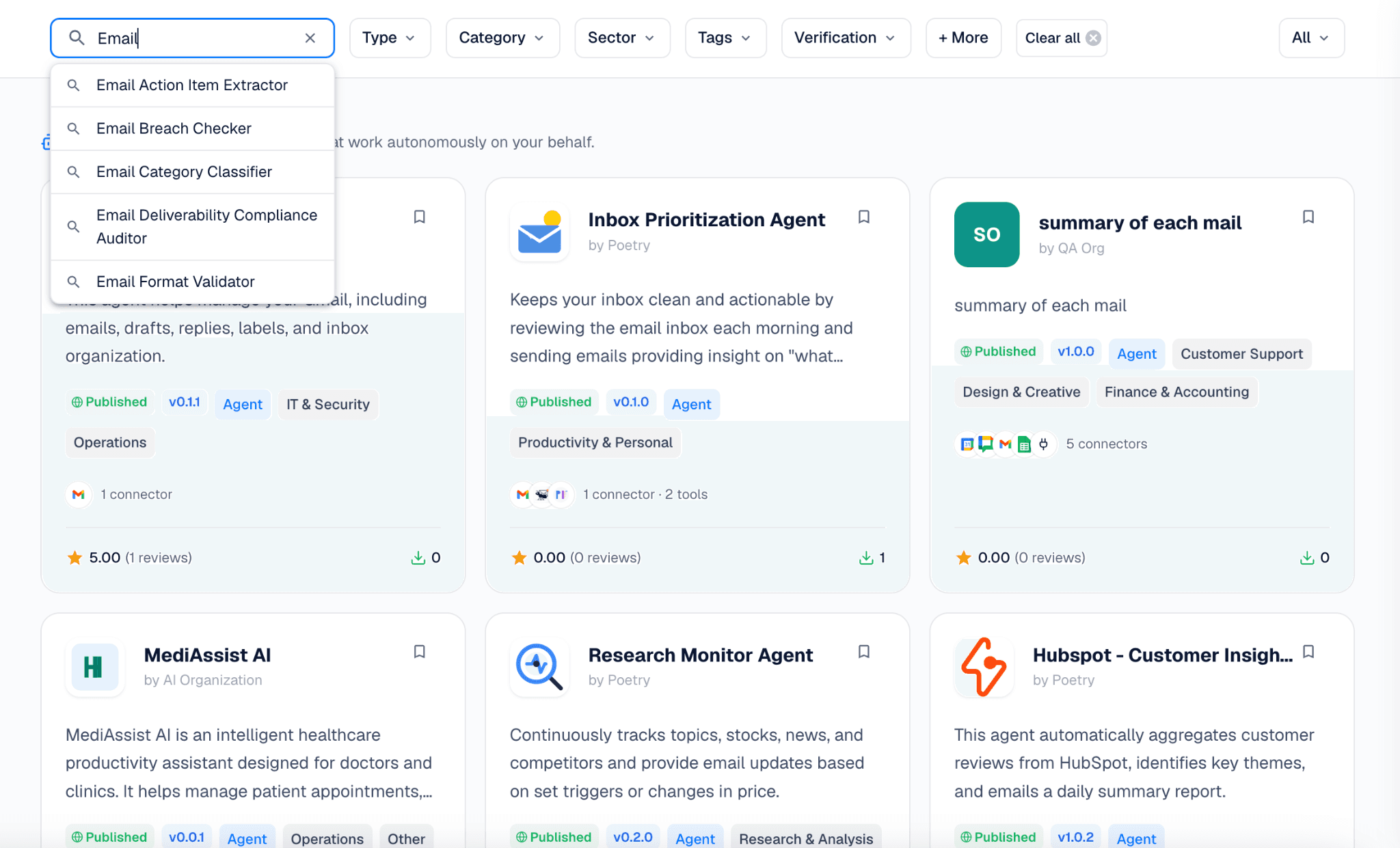
If you're still exploring possibilities, category filters can help narrow down your choices based on broader use cases like productivity, personal assistance, or operations.
The goal is to reduce hundreds of possibilities into a small group of realistic options.
Once you've identified an agent that looks promising, start with its description.
A strong description should clearly explain:
What the agent does
What problems it solves
What types of tasks it can handle
What it is not designed to do
This is one of the fastest ways to determine whether an agent aligns with your goals.
The more specific the description, the easier it is to set expectations upfront.
Review Strengths and Limitations
No AI agent excels at everything.
Each one is designed for a particular set of responsibilities.
Before adopting an agent, review both its strengths and its limitations.
Understanding where an agent performs well can help you maximize its value, while understanding its weaknesses can prevent frustration later.

Choosing the right agent often comes down to choosing the right specialization.
Understand The Cost Structure
Another important factor is cost.
Some agents are free to adopt, but that doesn't always mean they are free to operate.
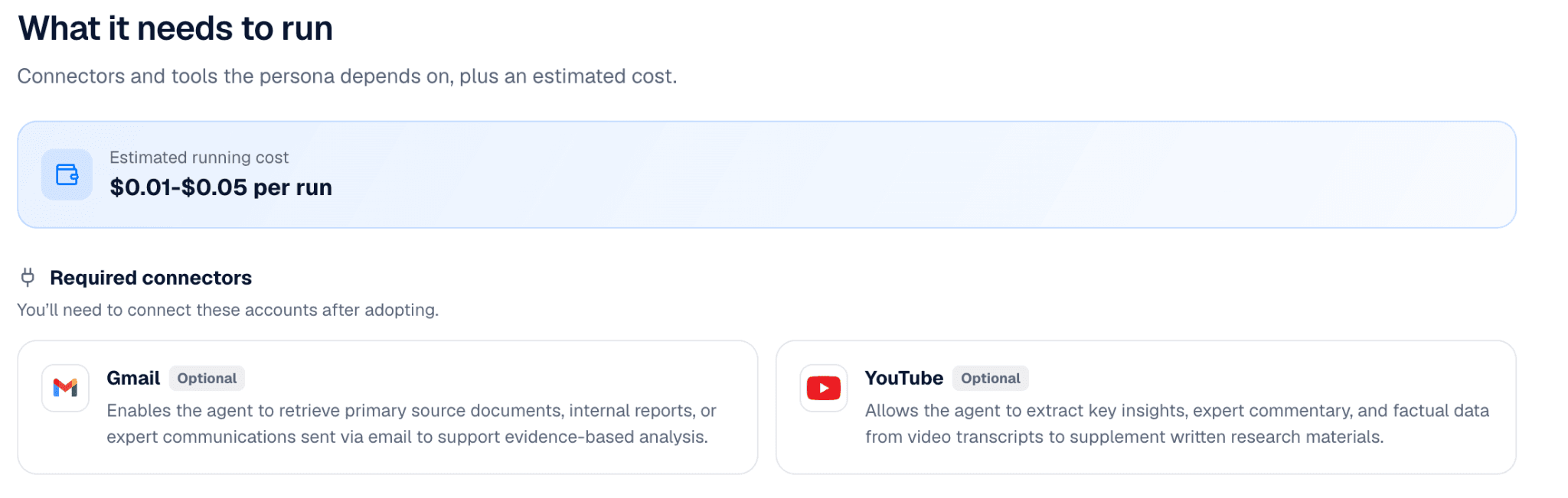
Many agents rely on functions that execute behind the scenes, and those functions may have costs associated with each run.
Reviewing pricing before adoption helps eliminate surprises and gives you a better understanding of long-term usage costs.
Verify The Required Connectors
Connectors are what allow agents to interact with your existing applications.
An agent may require access to tools such as:
Gmail
Google Calendar
Google Drive
Other third-party platforms
Before adopting an agent, make sure its required connectors align with your workflow.
An email-focused agent, for example, won't provide much value if you never intend to connect your inbox.
The right agent should fit naturally into the systems you already use.
Test The Agent Before Committing
One of the most valuable features available is the ability to test chat with an agent before adopting it.
Treat this as a free trial.
Give it a real task.
Ask it a question you would normally solve yourself.
Evaluate how it responds.
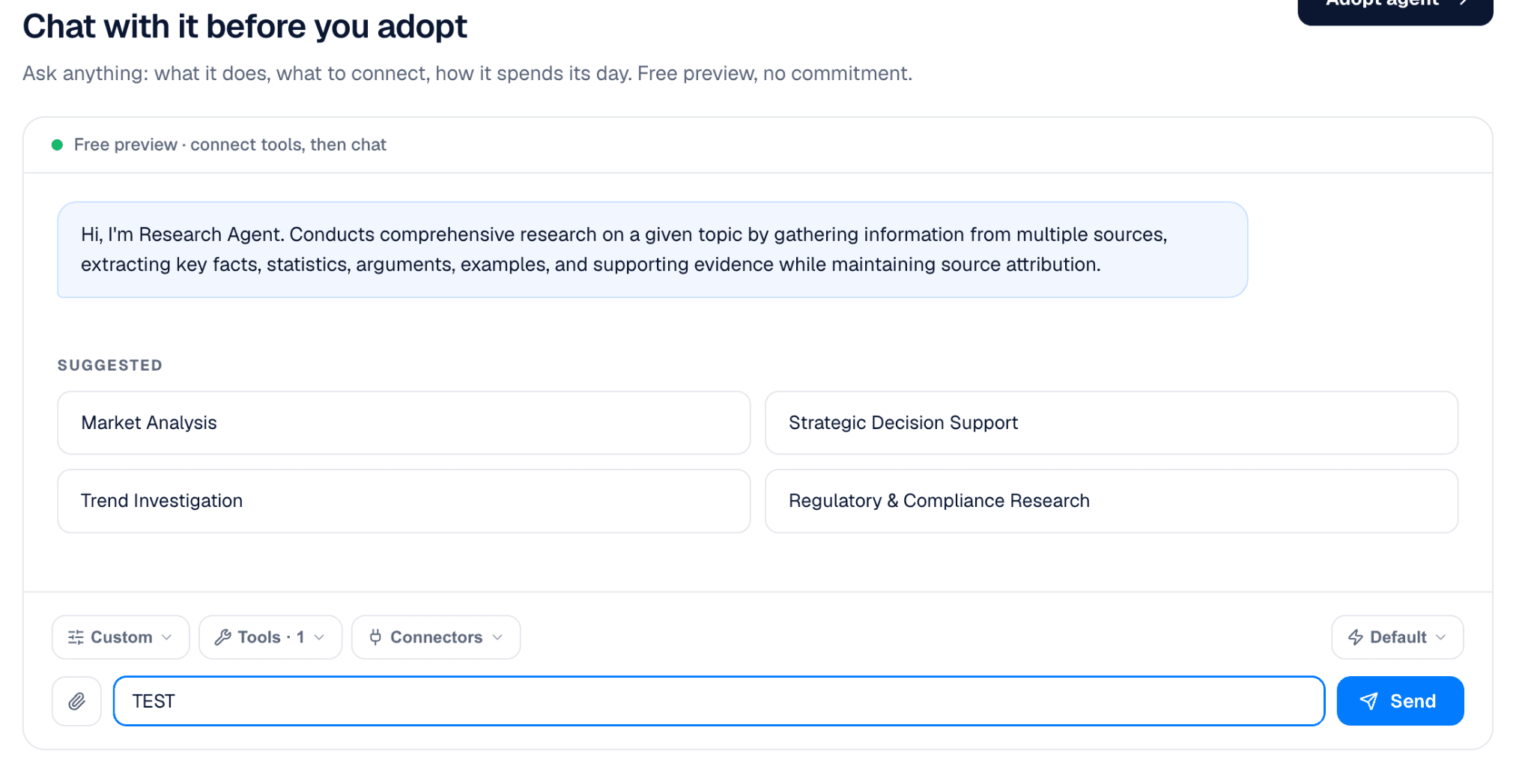
This simple step can quickly reveal whether an agent understands your needs and whether its outputs meet your expectations.
Review The Builder's Track Record
Finally, don't overlook the person behind the agent.
Publisher profiles provide additional context, including:
Number of published agents
Number of published functions
Total agent runs
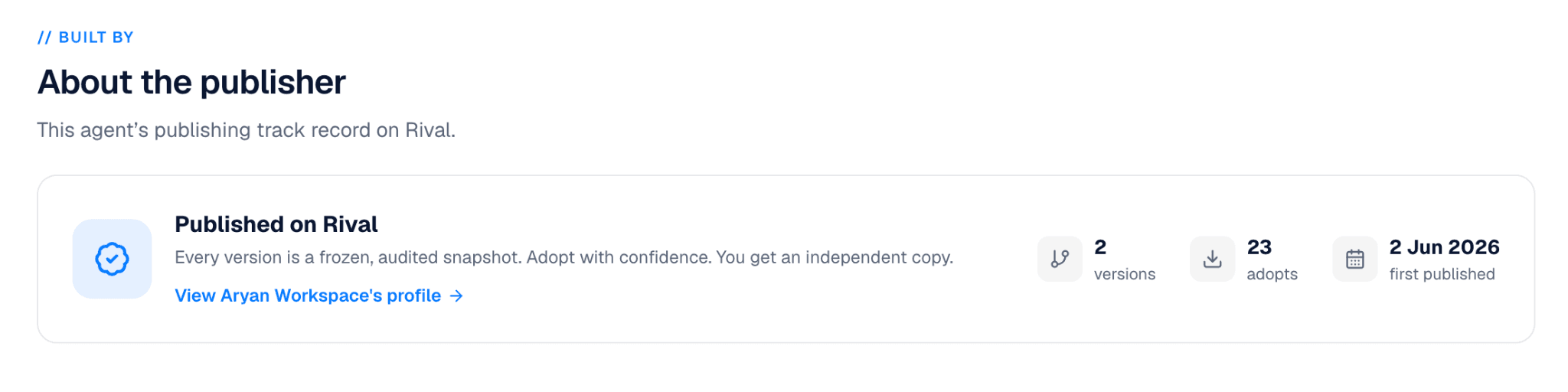
A strong track record can provide confidence that a builder has experience creating reliable solutions.
New builders should not be avoided, but reviewing their history can help you make more informed decisions.
Choosing An Agent Is About Building Confidence
The best AI experiences happen when expectations are clear from the beginning.
Instead of adopting agents blindly, spend a few minutes evaluating what they do, how they work, and who built them.
By reviewing descriptions, limitations, costs, connectors, test chats, and builder history, you can confidently choose agents that fit your workflow and help you get work done faster.
The goal isn't to find the most popular agent.
It's to find the right one for the job.
TL;DR
Choosing an AI agent shouldn't be guesswork. Before adopting one, review its description, strengths, limitations, pricing, required connectors, and builder history. Taking a few extra minutes to evaluate an agent upfront can help you find a solution that fits naturally into your workflow.